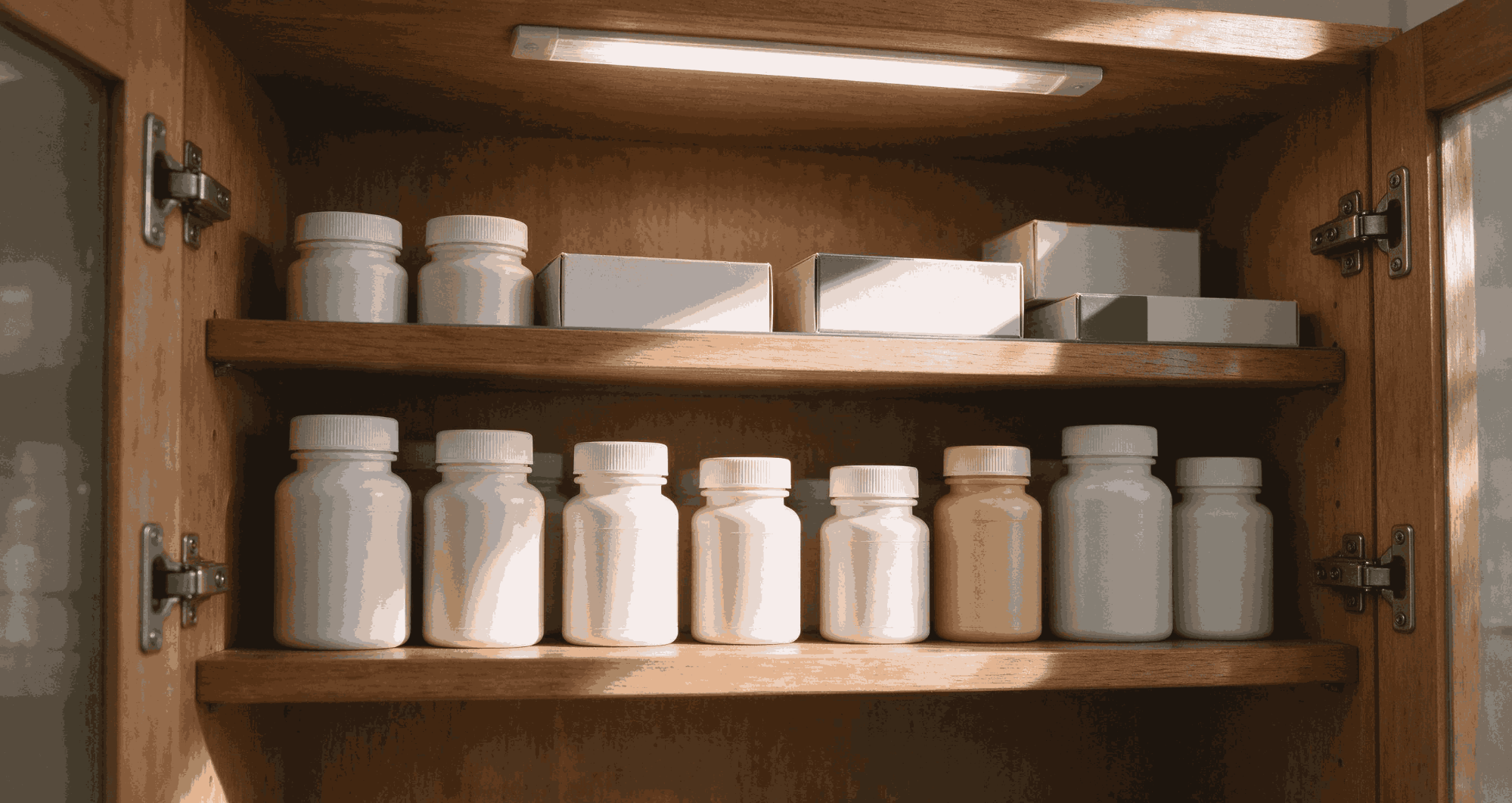
Medicines are not ordinary products — they are sensitive ones. Their quality, potency and safety can be profoundly affected by the conditions under which they are stored, including temperature, humidity, exposure to light and even the way they are handled. Understanding how to store medicines correctly is an essential part of responsible healthcare. It protects both the product itself and, more importantly, the person who will take it, ensuring that every dose delivers the intended therapeutic effect.
As a general rule, most oral medicines — such as tablets, capsules, syrups and powders — should be kept in a cool, dry place, away from direct sunlight and excessive moisture. Surprisingly, two of the most common places people store medicines are among the worst choices: the bathroom and the kitchen. Bathrooms experience frequent swings in temperature and humidity from showers and baths, while kitchens are exposed to heat and steam from cooking and appliances. These fluctuating conditions can degrade medicines far more quickly than many people realise. A cabinet in a bedroom or hallway, or a dedicated, labelled medicine box kept in a dry, ventilated area, is usually a far better option.
Temperature is especially critical for certain products. Some insulins, select biologics, certain eye drops and a number of vaccines must be stored in a refrigerator, usually within a specified range such as 2–8 °C, and must never be frozen unless the label explicitly permits it. Freezing can permanently damage the structure of these products and render them ineffective. Similarly, medicines left in a hot car, in direct sunlight, or near a radiator can deteriorate quickly. Any medicine that has been exposed to extreme heat, direct sunlight or freezing should be treated with caution, because its efficacy may no longer be reliable. The single most important habit is to read the label and the patient information leaflet every time, and to follow the exact storage instructions given for each specific product.
Expiry dates are not optional, and they should never be ignored. An expiry date indicates the date up to which the manufacturer guarantees the full potency and safety of the product, provided it has been stored under the stated conditions. Using a medicine after its expiry date carries two risks: reduced effectiveness, because the active ingredients may have degraded, and, in some cases, harm from the breakdown products of degraded ingredients. It is also important to look beyond the printed date. Tablets that are cracked, discoloured, crumbling, or that emit an unusual odour should not be used even if the expiry date has not yet passed, because these visual signs can indicate degradation, contamination or improper storage. When in doubt, it is always safer to discard the product than to risk using a compromised one.
Proper storage also includes how medicines are kept out of harm's way. Medicines should always be stored out of the reach and sight of children and pets, ideally in a locked cabinet or a high, inaccessible location. Child-resistant caps are helpful, but they are not a substitute for responsible storage. Caregivers should be particularly vigilant, as accidental ingestion of medicines by children is a leading cause of preventable poisonings. Finally, damaged or expired medicines should be disposed of properly, following local guidance or pharmacy take-back programmes, rather than being flushed down the sink or toilet or thrown loosely into household waste, where they could be misused or contaminate the environment.
The benefits of good storage habits are simple but far-reaching. By keeping medicines in the right conditions, checking expiry dates, inspecting products before use, and storing them safely away from children, we preserve product quality, prevent accidental use and reduce waste. These small, consistent habits help ensure that when a medicine is needed, it is safe, effective and ready to do its job — safeguarding the health of individuals, families and communities alike.